 BeFit Tracker Help
iPhone & iPad tracker guide
Cycle tracking on iPhone and iPad
Record periods and daily observations, understand cycle status, and distinguish saved history from predictions.
Cycle is a Beta tracker that combines period ranges and dated observations with estimates calculated from that history. The guide’s most important distinction is simple: flow, mood, and period dates are records; phase, fertile-window, ovulation, and next-period dates can be predictions.
Allow optional Cycle import from Apple Health
On iPhone and iPad, BeFit Tracker can read supported menstrual-flow records after you grant Health permission. The access is read-only. Review the original source in Apple Health before manually adding the same period, because overlapping ranges are rejected and duplicate observations can make the history confusing.
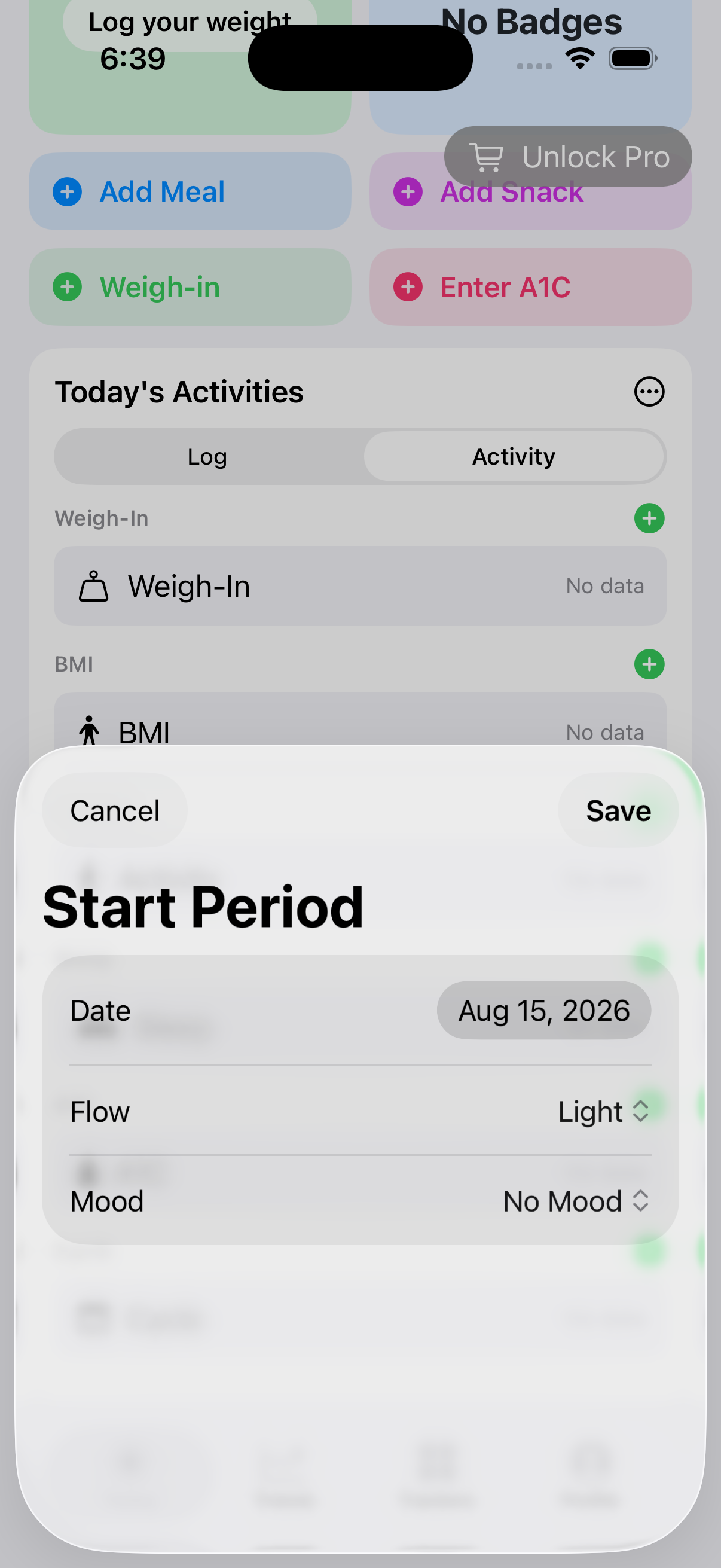
Start and end a current period
- Open Trackers, choose Cycle, and select the date on which the period began.
- Tap Start Period. This creates the beginning of an active period; the action is unavailable while another period is active.
- Add a flow level or mood for a selected date with Log Cycle when that detail is useful.
- When the period ends, select its actual final date and tap End Period.
- Check History to confirm the saved start and end boundaries.
Add a completed period from the past
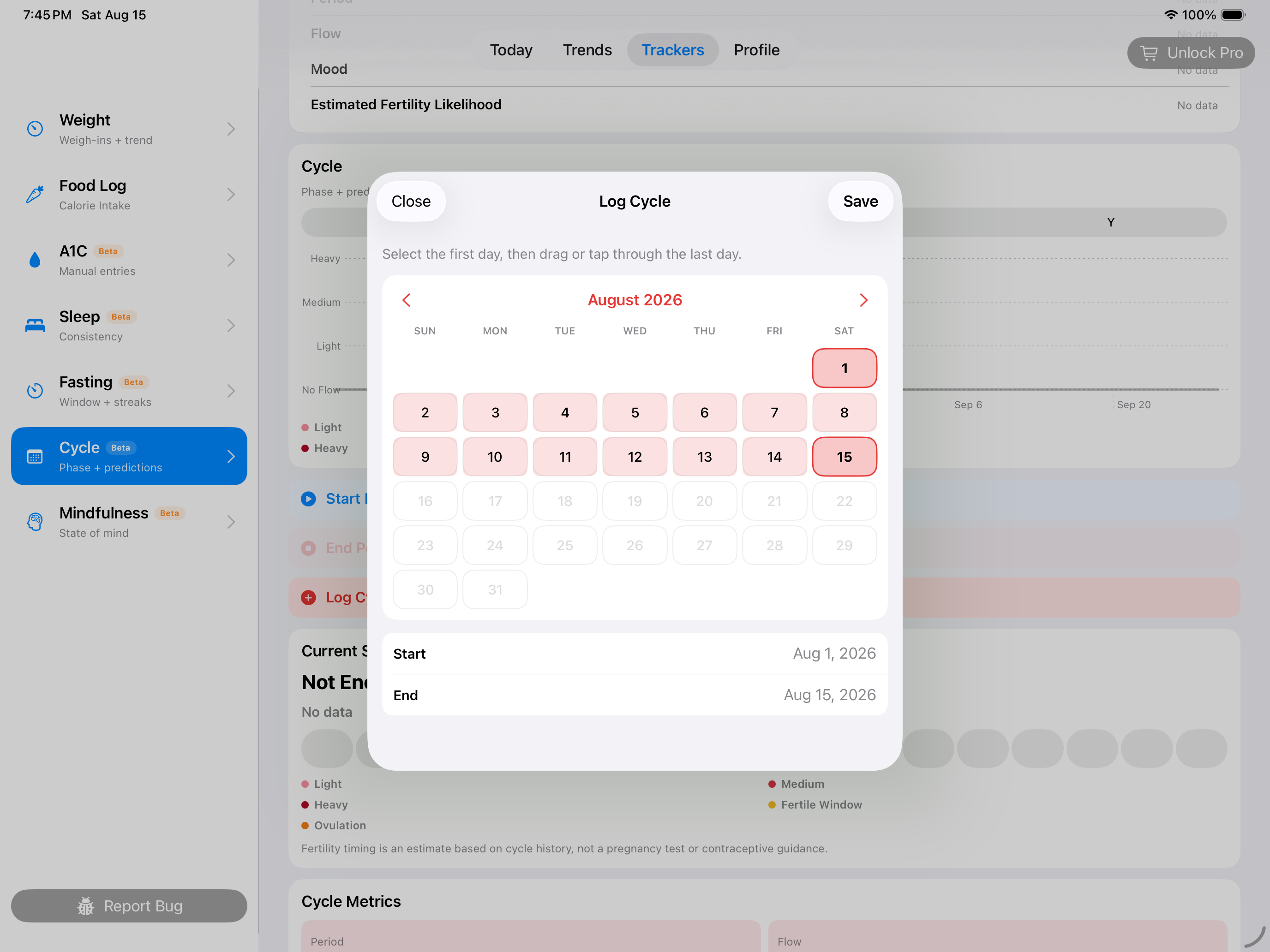
- Tap Log Cycle and choose the completed-period range option.
- Select the known start and end dates.
- Review both boundaries for overlap with existing history.
- Save the range. Use this path for older history instead of starting and immediately ending a live period.
Record flow and mood observations
- Select the date the observation belongs to.
- Open Log Cycle.
- Choose the available flow level and, optionally, a mood.
- Save and verify the observation under that date in History.
An observation adds detail to a day; it does not by itself create or end a period range.
Know what each section means
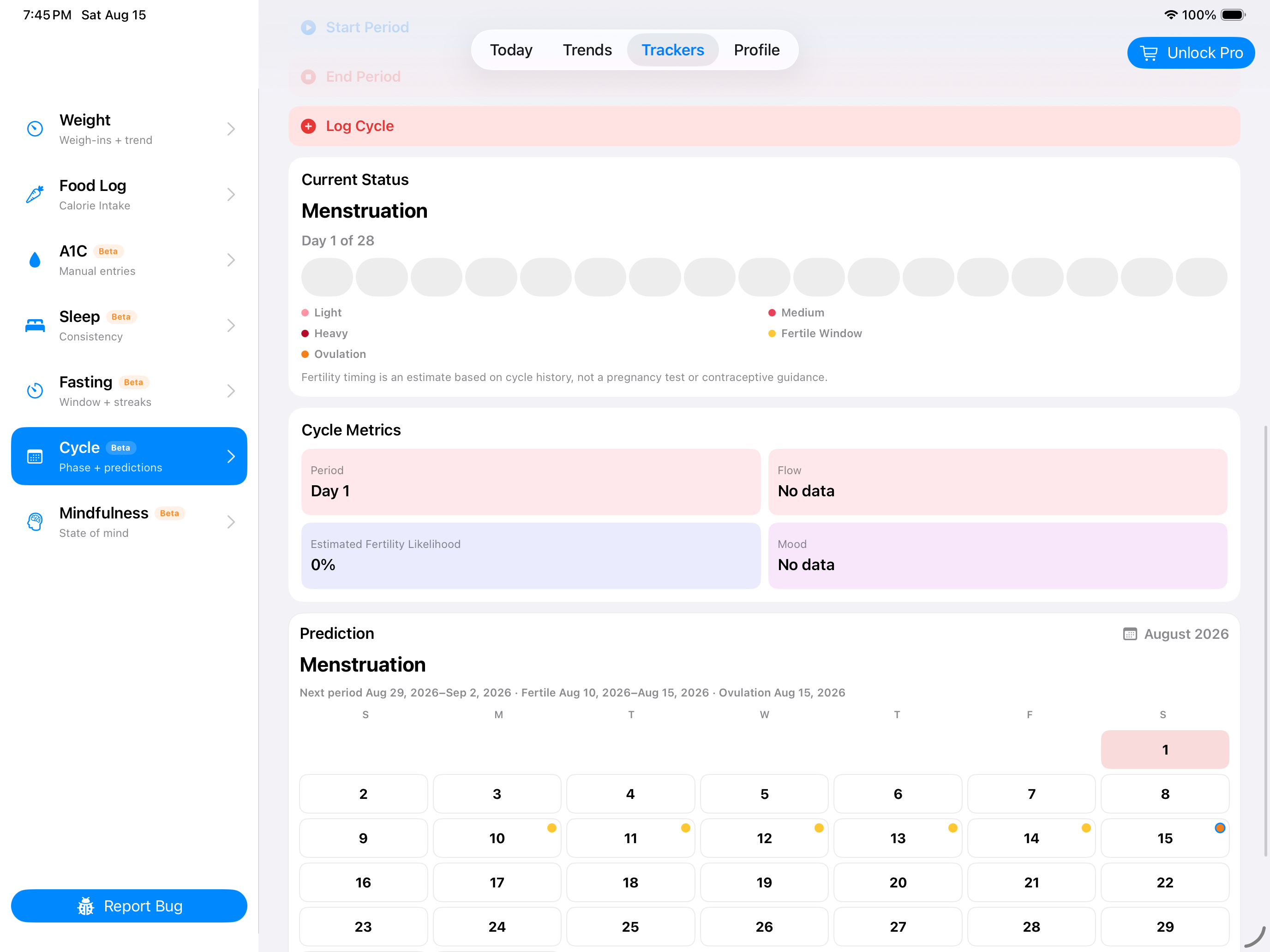
- Current Status shows the selected date’s estimated phase and cycle-day position based on available history.
- Cycle Metrics brings together recorded flow or mood and calculated context such as cycle day and fertility likelihood.
- Prediction Calendar marks estimated future period, fertile-window, and ovulation dates. Its legend distinguishes these estimates from recorded period days.
- Trend summarizes recorded flow over the selected range. Week, Month, 6 Months, and Year provide different levels of context.
- History lists the actual saved period ranges and observations. Return here when you need to verify what was recorded.
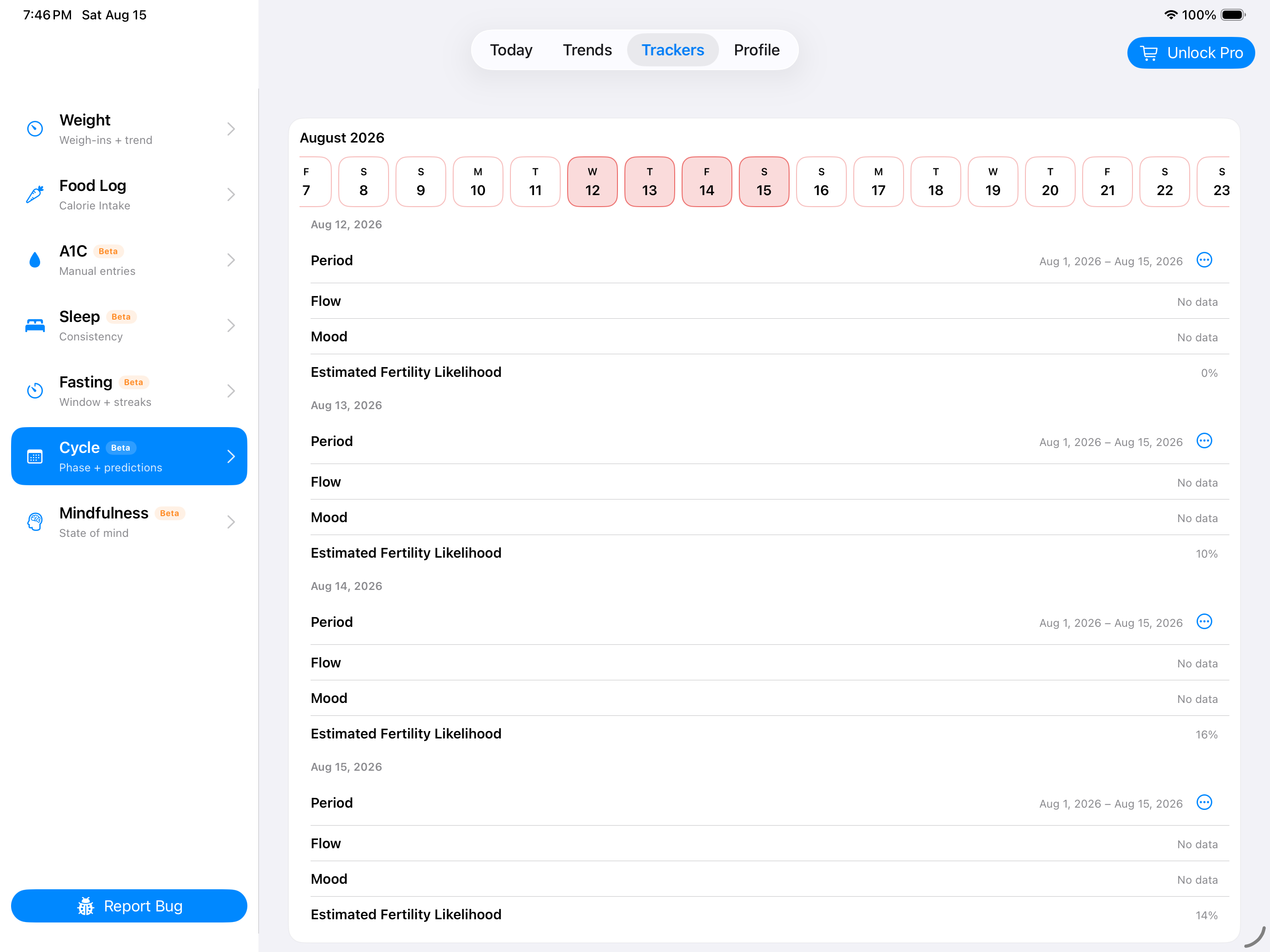
Correct history and recalculate predictions
- In History, choose Edit for the incorrect period or observation.
- Correct the dates, flow, or mood and save. Do not add an overlapping replacement first.
- Delete the original only when the record should not exist.
- Review Current Status, Cycle Metrics, the Prediction Calendar, and the trend again. They can all change after history changes.
Use cycle history with the rest of BeFit Tracker
Viewing cycle dates beside sleep, mindfulness, food, activity, or weight can help you remember the context around a period and prepare useful questions. These are personal observations, not a conclusion that the cycle caused another change.
Do not use BeFit Tracker’s predicted period, fertile-window, ovulation, phase, or fertility likelihood as contraception, a fertility test, a diagnosis, or medical advice.